
Rare earth dependencies and strategic leverage in Europe’s security order
Since Russia’s full-scale invasion of Ukraine, Europe’s security order has entered a new phase defined by rearmament, sanctions, and the weaponisation of supply chains. This shift has pushed critical raw materials to the centre of economic statecraft. Rare-earth elements such as neodymium, praseodymium, and samarium are indispensable to the magnets, sensors, and guidance systems that underpin precision weapons, advanced radar, and electric propulsion. Mineral access has shifted from economic concern to strategic imperative.
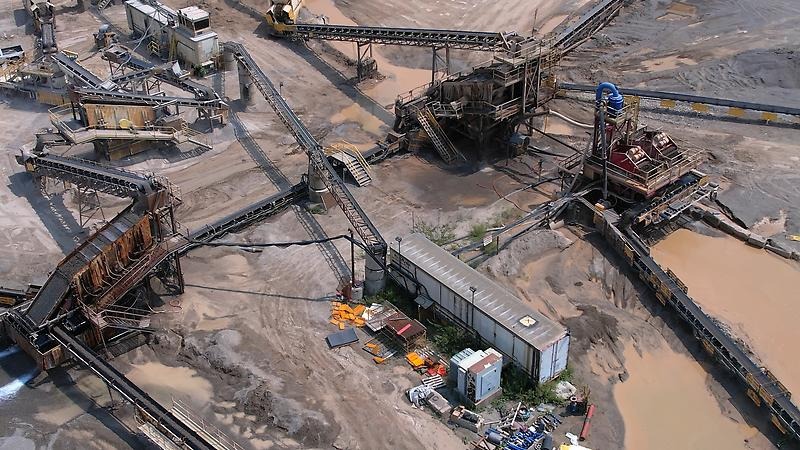
Canadian rare earth mining site. August 1, 2024. Photo: Shutterstock
China’s near-monopoly over both refining and magnet production anchors a structural dependence shaping alliance politics. In response, the US has pursued transactional mineral diplomacy and a “mine-to-magnet” strategy, while the EU relies on regulatory instruments to accelerate domestic capacity. For Sweden, and for Europe more broadly, geological assets become instruments of deterrence credibility and strategic leverage. This article examines how mineral supply reshapes alliance dynamics and economic power in Europe’s emerging security order.
From industrial inputs to strategic imperatives
Control of resource value chains has moved to the centre of economic statecraft. When Beijing tightened specific controls on rare-earth elements in 2025, it directly hit Western defence supply chains. This shift mattered less for the economic cost than for the signal it sent: materials essential to fighter aircraft, missiles, and radar systems were now governed by the same administrative leverage as civilian goods, demonstrating how quickly supply dependence can be weaponised.
Rare-earth elements underpin electric actuators and precision guidance and sensor systems in modern military platforms. A fighter aircraft contains hundreds of kilograms of rare-earth components. Substitution is technically possible but operationally costly, increasing weight, reducing efficiency, and requiring re-certification.
As European states accelerate rearmament, these material dependencies have moved from the background of defence planning to its core. Rare earths shape what can be built, how fast it can be produced, and at what scale capability can be sustained under stress.
The strategic salience of rare earths is amplified by the fact that they underpin two of the defining projects of the decade: the energy transition and military rearmament. Wind turbines, electric vehicles, grid infrastructure, and data centres rely on the same high-performance magnets and alloys as submarines, aircraft, and missile systems.
Scarcity affects civilian and military demand in different ways. Civilian industries typically absorb input shortages through price adjustments, product redesign, or delayed delivery. Defence organisations face a different constraint: the requirement for assured access at the moment of operational need. Average availability across a business cycle matters little if a material is unavailable during mobilisation or sustained conflict. Following Russia’s invasion of Ukraine, European defence procurement timelines shortened just as climate targets expanded demand for rare-earth-intensive technologies. Stockpiles once considered adequate were drawn down. What might previously have been an inconvenience became a strategic concern.
Military demand is hence modest in volume but decisive in timing. A small shortfall at the wrong moment can have outsized effects on readiness and deterrence credibility. History shows that militaries can adapt to material scarcity through substitution or redesign. Yet such adjustments typically require years of development, industrial coordination, and acceptance of performance trade-offs. The difficulty today is that civilian and military demand increasingly rely on the same value chains and dual-use technologies. The tighter this coupling becomes, the harder it is to treat rare earths as ordinary commodities governed by price signals alone. Instead, they become objects of prioritisation, allocation, and political negotiation.
From resource endowment to value chain leverage
Access to raw materials has always influenced security policy. What has changed is where leverage is exercised and how it is applied. In earlier eras, vulnerability was visible and often bilateral. Coal, oil, and uranium were geographically fixed, nationally regulated, and frequently state-owned. Disruption was blunt and responsibility was clear. Today, dependence is embedded in value chains that stretch across borders, firms, and regulatory systems, often masking where strategic control resides. Rare earths exemplify this shift. Geological availability is no longer decisive: rare earths are not scarce in absolute terms. Strategic leverage lies in the stages that transform raw material into usable industrial inputs: separation, refining, alloying, and magnet manufacturing. Security-relevant power now accumulates here, rather than at the mine.
The current value chain configuration is the product of deliberate choices. From the 1990s onwards, Chinese central and provincial authorities identified rare earths as strategic inputs for prioritised industries and pursued vertical integration across the value chain. Local governments offered land, subsidised energy and financing, and tolerated environmental externalities that would have faced opposition elsewhere. Western firms responded to these commercial incentives. European, Japanese, and American companies closed processing and magnetproduction facilities at home and relocated manufacturing to China, attracted by lower costs and access to expanding downstream markets. Governments largely acquiesced, confident that global markets would continue to function and that supply security could be treated as a commercial rather than strategic concern.
By the mid-2000s, this division of labour had solidified. Europe retained advanced defence, automotive, and energy industries, but depended almost entirely on imported rare-earth oxides, metals, and magnets. Beijing secured significant extraction capacity abroad, locking in raw material supply. Simultaneously, China consolidated domestic downstream capacity to a level that is now difficult
to contest. Today, China accounts for roughly 70 per cent of global rare-earth mining, but more critically, it controls more than 85 per cent of refining capacity and as much as 90 per cent of permanent magnet production. This structure grants Beijing effective administrative authority over the entire value chain, regardless of where the ore is mined.
This dominance provides leverage over the value chain in two modes: restriction and abundance. China has demonstrated the ability to adjust output and access conditions in ways that move prices and reshape competitors’ incentives, discouraging investment elsewhere and reinforcing concentration. In this sense, leverage is exercised not only by denial, but by the power to set the terms of normality.
Since 2010, Chinese policy has increasingly shifted from episodic restriction to administrative control. Rather than imposing blanket bans, authorities have relied on licensing regimes that require end-user disclosure and regulatory compliance, allowing access to be delayed, conditioned, or suspended without formal prohibition.
Weaponised interdependence and European asymmetry
The strategic implications of this shift first became visible in 2010, when China restricted rare-earth exports to Japan during a diplomatic dispute. Tokyo treated the episode as a warning. The Japanese government intervened directly, subsidising alternative supply through partnerships with companies such as Lynas Rare Earths in Australia and Malaysia. Costs increased, but exposure fell. The response
demonstrated that diversification required policy, not just price signals.
This is the current strategic dilemma confronting Europe and its allies. Rare-earth value chains were built for efficiency and scale during a period when geopolitical risk was discounted. Retrofitting them for security is possible, but it is slow, contested, and deeply political. The question is no longer whether dependence exists, but how much leverage it confers and how it can be managed without fracturing alliances or markets altogether. The politics of rare earths now unfold within a contested landscape of economic power. Weaponised interdependence has moved from regulatory margins to the centre of trade policy and political rhetoric.
Interdependence also means that policy measures spill over from one sector to another and to other trading partners. In 2022, Washington imposed sweeping export controls on advanced semiconductors, chip design software, and manufacturing equipment destined for China. These measures reframed access to critical inputs as a security issue rather than a commercial one and made political alignment an explicit condition for participation in leading technology supply chains.
China responded by broadening its own menu of economic security instruments. Rather than mirroring US measures sector by sector, Beijing focused on areas where it held structural advantages. Rare earths offered leverage through value chain dominance. In 2025, China expanded the scope of its controls to cover related technologies and products containing Chinese rare-earth inputs, echoing the extraterritorial logic already applied by the US in the semiconductor domain. Licences for military end use would not be approved. Furthermore, licences were required for all cross-border trade, not only from China, which dragged Europe into the dispute.
These developments reverberated through industrial supply chains. In Congressional testimony and regulatory filings during 2025, large US aerospace and defence contractors including Northrop Grumman, Lockheed Martin and Raytheon Technologies explicitly flagged rare-earth supply chain risks tied to China’s dominance as a genuine operational concern. They noted that lead times for components containing rare-earth magnets could extend to 18–24 months under normal conditions and that export restrictions would exacerbate programme delays across radar, guidance, and propulsion systems. In the second half of 2025, following high-level negotiations between Washington and Beijing, China temporarily suspended implementation of its newest rareearth export controls for one year. The pause coincided with US moves to moderate or defer certain tariff measures after President Trump met President Xi.
The sequence reinforced a central point. Rare-earth controls are not an autonomous industrial policy, but an instrument deployed within a broader process of trade bargaining and geopolitical signalling.
In the US, rare earths have moved from an industrial concern to a core national-security priority. The 2025 National Security Strategy places critical minerals at the centre of economic statecraft, framing supply-chain resilience as indispensable to military readiness and strategic autonomy. Federal support has expanded under a “mine-to-magnet” push to rebuild domestic processing and magnet capacity, including public–private partnerships. Higher costs are explicitly accepted as the price of assured access and insulation from coercion.
Washington has paired industrial policy with coercive trade diplomacy. In late 2025, President Donald Trump signed a series of bilateral critical-minerals agreements with Australia, Japan, Thailand, and Malaysia, tying trade concessions to preferential US access to supply, with negotiations conducted under the shadow of tariff escalation. The earlier minerals accord with Ukraine embedded reconstruction finance in long-term resource access, signalling that critical materials now shape alliance bargains as much as security guarantees. Even the administration’s assertive rhetoric toward Greenland and Canada has revolved in part around Arctic and North American mineral assets, underscoring how geology
has entered grand strategy.
Beyond bilateral deals, coordination has expanded through the G7 Critical Minerals Action Plan, the enlarged Minerals Security Partnership/Forum on Resource Geostrategic Engagement, and the Critical Minerals Ministerial, inaugurated in February 2026. These formats are formally multilateral, yet in practice largely US-driven. What is emerging is less a neutral rules-based regime than a
US-centred economic security bloc, organised around trusted supply chains and
the strategic exclusion of China.
Europe confronts this landscape from a position of asymmetry. The EU neither initiated the US–China technology confrontation nor controls its escalation, yet its industries remain heavily dependent on Chinese processing and magnet production without comparable leverage in return. Diversification is urgent but, unlike Washington or Beijing, Brussels’ instruments remain regulatory rather than coercive, ill-suited to a contest defined by speed, scale, and executive discretion.
The EU’s Critical Raw Materials Act of 2023 and subsequent ResourceEU action plan seek to accelerate domestic extraction, processing, and recycling through regulatory targets and fast-tracked “Strategic Projects,” such as the Per Geijer rare-earth deposit in Kiruna, Sweden. Yet these instruments reflect a fundamentally different model from Washington’s deal-based mineral diplomacy. The EU relies on market incentives, permitting reform and coordination rather than executive leverage or bilateral resource-for-security bargains.
Weaponised interdependence is therefore no abstraction but the operating environment. Economic power is now exercised openly through supply-chain control and resource diplomacy. For Europe, the question becomes how interdependence can be managed when both rivals and allies treat minerals as strategic leverage rather than neutral commodities. As economic statecraft moves to the centre
of geopolitical competition, the EU’s task is to navigate a landscape where supply chains are weaponised by rivals and conditioned by allies.
Strategic questions for the next decade
The debate over rare earths is often framed as a supply problem to be solved through diversification, recycling, or substitution. That framing understates what is at stake. The issue confronting Europe and its partners is not whether rareearth dependence can be reduced at the margin, but how economic power is exercised in an era where interdependence has become a tool of statecraft.
The first question is how much dependence is tolerable. Strategic autonomy does not require eliminating exposure altogether. It requires ensuring that dependence cannot be turned into decisive leverage at critical moments. A shift from near total reliance on a single supplier to a more diversified but still imperfect supply base may be sufficient for deterrence and resilience. The challenge lies in deciding
where that threshold lies and who bears the cost of crossing it.
The second question concerns whether Europe is politically willing to endure the time required to rebuild capacity. Reconstructing processing, refining, and magnet manufacturing takes years. Permitting is slow. Environmental opposition is real. Defence qualification cycles are long. During this transition, Europe
remains exposed to external decisions taken in Washington and Beijing. Bridging this gap requires interim measures such as stockpiling, long-term contracts, and tighter political coordination. But it also requires accepting higher costs, revisiting environmental standards, and investing in projects that may never be commercially competitive under normal market conditions. These trade-offs are politically contentious. Yet refusing them does not shorten the timeline, it merely prolongs vulnerability.
The third question is leverage. The US can trade market access, financing, and security guarantees for alignment, as the 2025 Ukraine minerals agreement made clear. China wields influence through its dominance of refining and processing. Europe’s instruments are weaker. Unless it develops credible leverage of its own, through market size, collective procurement, or strategic investment, it risks becoming a rule-taker in a contest increasingly defined by others.
Finally, there is the question of alignment. Europe’s dependence is not only external but asymmetric. Reducing exposure to China often increases reliance on the US. That may be preferable, but it is not neutral. An economic security strategy shaped by “America First” priorities does not automatically align with European industrial interests. In Washington, secure supply chains and access to critical materials are now framed as matters of national security rather than shared economic policy. Navigating this landscape requires clearer choices about where autonomy is essential, where dependence is tolerable, and how alliance politics shape access in practice.
Rare earths are not an isolated vulnerability. They are a case study in how industrial capacity, trade policy, and security strategy have become inseparable. The era in which economic interdependence could be treated as a stabilising force insulated from geopolitics has ended.
This article is written by researchers Benjamin Ståhl and Alexander Gorgijevski part of the report Strategic Outlook 11: Wide Awake in a World of Disorder. The report examines how geopolitical tensions, economic uncertainty, and rapid technological change are reshaping the international system and challenging established patterns of cooperation. It explores key security, economic, societal, military, and technological developments emerging in an era of strategic rivalry and systemic competition.